
Thanksgiving Boxes for Heavy Seasonal Bakes and Gifts
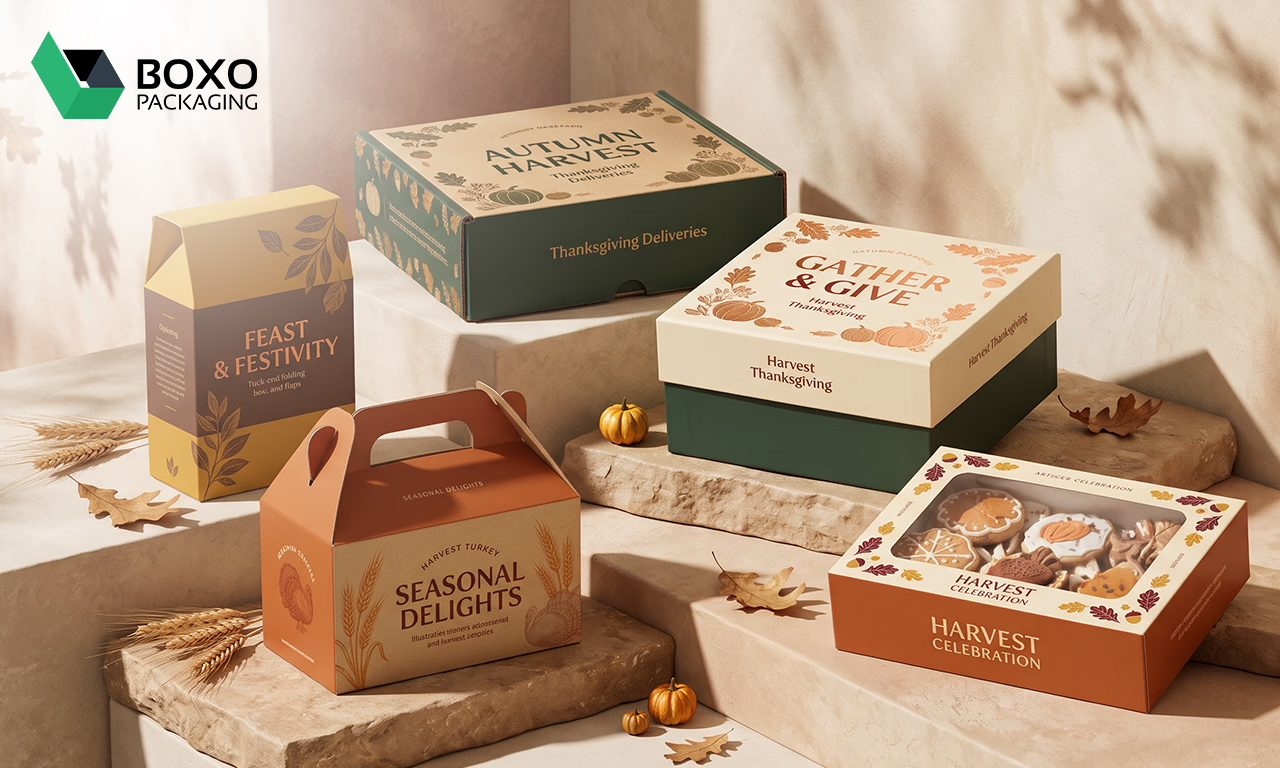
Holiday boxes often leave the table carrying dense pies, filled jars, quick breads, candles, and small gifts. Each item adds a different kind of load: concentrated weight, a fragile rim, a seal that can tilt, or a rigid shape that can shift into a corner. Thanksgiving Boxes need to support that mix without bowing at the base or letting the lid rise during a short car trip. The safest starting point is the heaviest item in the range, not the average. A carton sized around cookies can look adequate on a table and still fail under a pie. Designing around the worst-case item gives lighter contents room to travel safely and reduces the chance that a host discovers a structural problem on the way to dinner.
What Loads Should Drive the Specification?
Begin with weight, footprint, height, and fragility. A pie is broad and rim-heavy, a jar is tall and seal-sensitive, and a loaf is dense enough to crush a weak corner. A candle adds rigid mass that can move against other contents. Measure each item and then test the combined load, because several moderate items can place more stress on a base than one heavy item alone. Also plan for stacking. Boxes loaded into a truck often end up two or three deep, and the bottom carton must carry a vertical load it may never see on a shelf.
- Use the heaviest item plus its packaging as the design load.
- Map every footprint and height before choosing a carton.
- Plan for at least one layer of stacking during transport.
- Record leak, grease, crush, and tilt risks separately.
How Should Base and Board Be Paired?
Base style and board grade have to be selected together. A plain tuck base can suit light cookies or favors, while a crash-lock or auto-bottom base spreads weight across panel joins and holds a heavier bake steady. A board liner under the base adds support without changing outside dimensions, which matters when a carton has already been sized for a shelf or gift bag. Kraft board gives a natural harvest tone, while white board offers a cleaner surface when artwork carries the seasonal message. Thicker board alone will not rescue a weak base join, so the two decisions need to be tested as one system.
Where Does Handling Damage Begin?
Damage usually starts with movement, not with the lid. A jar that slides can crack against a corner, and a pie with a loose cavity can arrive with a broken crust. An insert that holds contents in place often does more for transit survival than extra board thickness, because the load stays where the structure expects it. Stacking is the second risk. A filled box should be lifted from one corner during testing, since a center lift can hide weakness at the base. Clear orientation labels and a quick shake test before sealing also help catch problems early.
Gable Boxes for Carry-Out, Retail, and Gift Use
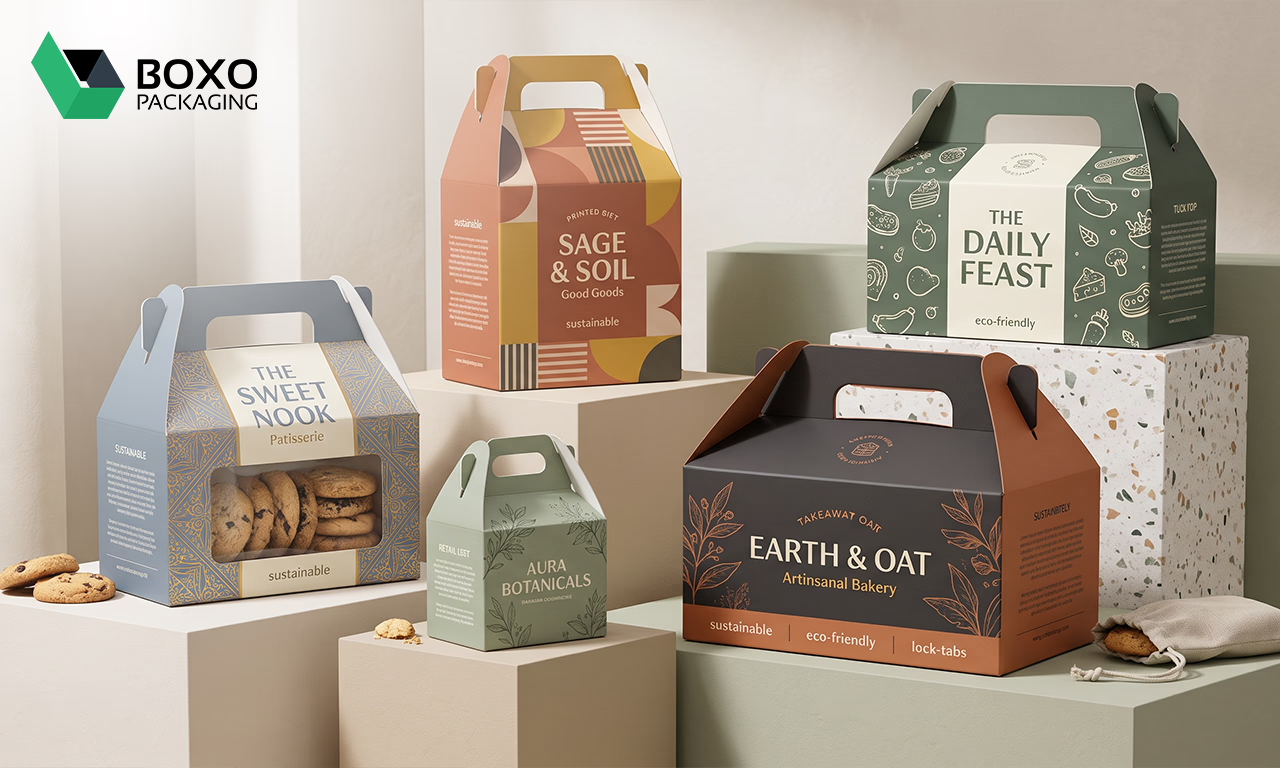
Gable Boxes pair a folded top handle with a roomy base, making them practical for bakery items, deli orders, party favors, subscription kits, and small retail purchases. The shape looks simple, but performance depends on how the blank is scored, how the handle is reinforced, and how the base carries weight. A gable box that feels sturdy on a counter can still strain at the handle or bow at the bottom once it is carried through a parking lot. Board grade, locking tabs, surface finish, and insert choice should be evaluated together so the box stays clean, closed, and comfortable in the hand.
Gable Box Construction Basics
A gable box is typically cut from one blank and folded into a house-like profile with a top ridge and carry handle. That single-piece design saves storage space and assembly time, but it also means score accuracy matters. Shallow or uneven scores can make the handle meet poorly, while overly tight scores can crack the board along the fold. Tabs that lock should be tight and not push too hard, and the top ridge should be level once closed. The box should be assessed as a fold out / fold down unit, not just a printed surface.
- Single-piece blanks simplify assembly, but require precise scoring
- Handle cutouts require sharp edges to hold up against tearing
- Locking tabs should snap closed without causing any damage to the top
- Flatpak storage reduces size prior to box formation
Handle Load and Base Support
Handle stress – handles carry more than the weight of the product as motion applies additional force. A swing-open box exerts a concentrated load on the edges of the handle and top ridge, more so if the content is heavy or offset to one side. Patches, rounded cutouts, and a top load ridge help. The base needs equal attention: an auto-lock or reinforced bottom keeps the load from pressing down on lower panels. A filled box should be carried from the handle for several minutes during testing, then checked for edge lift, tab strain, and base bowing. A box that only feels strong when lifted from underneath has not been fully tested.
Everyday Failure Points in Gable Boxes
Most gable box failures appear at the handle, the top closure, or the base corners. A torn handle usually points to thin board or a sharp cutout. A top that pops open often comes from weak locking tabs or overfilling. Base corners can split when contents shift, particularly in boxes used for jars or dense baked goods. Moisture and grease are separate risks: a greasy bakery item can soften board from the inside, while a chilled product can create condensation. Vent holes, grease-resistant liners, and correctly sized inserts reduce these problems without changing outside dimensions.
Board Finish and Insert Selection
Board choice should follow the item’s weight, moisture level, and display needs. A lighter caliper can suit favors or small dry goods, while a heavier board gives structure to deli orders and boxed meals. Matte finishes feel understated, gloss finishes make colors stand out, and uncoated Kraft supports a natural look. Window film can show the product, but it must be placed away from the handle area so the top ridge keeps its strength. Inserts should stop movement without making the box hard to close. A shallow cradle for baked goods, a collar for jars, and a divider for mixed kits each solve a different problem. The best gable box closes cleanly, carries comfortably, and still looks tidy when the recipient opens it.
Healthcare Boxes for Medical Devices, Samples, and Pharmacy Use
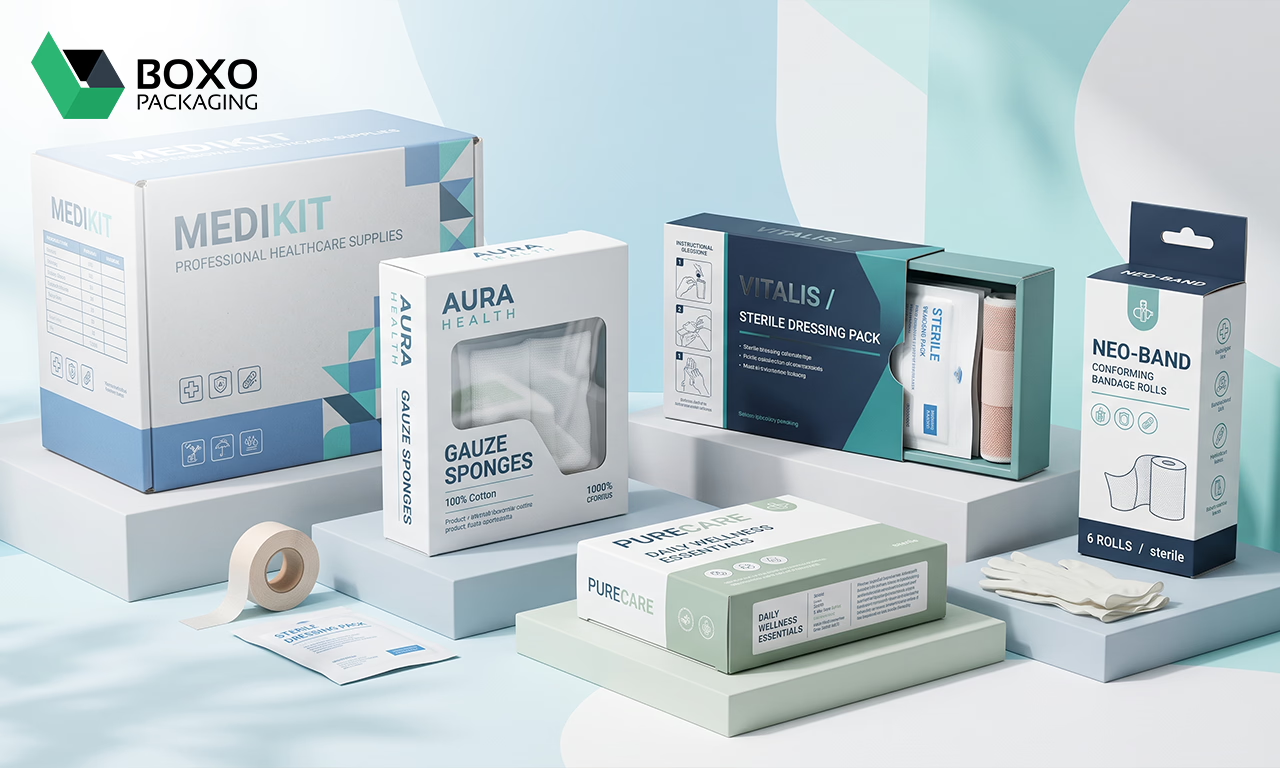
Healthcare Boxes carry items where packaging is part of the safety chain: medical devices, diagnostic samples, pharmacy orders, sterile kits, and home-care supplies. The box must protect the product, preserve labeling integrity, and support clean handling from pick-up to patient. But unlike a retail package, a healthcare box may require more documentation for traceability, tamper evidence, and contamination control. Board grade, closure style, insert design, and labeling all need to be chosen as one system so the package performs reliably without adding unnecessary complexity.
Healthcare Box Construction Essentials
Healthcare boxes are usually built from folding cartons, corrugated mailers, or rigid setups, depending on the product’s fragility and sterility needs. A crash-lock or tuck-bottom carton is best suited for lightweight equipment and pharmacy items; the corrugated mailer will have more padding capacity for diagnostic kits and sample shipments. Tamper-evident seals, void indicators, and locking tabs are included to ensure that the package remains unopened during transit. Score accuracy matters more than in general retail packaging because a poorly formed closure can compromise the seal or make the box hard to open for elderly users or caregivers.
- Tamper-evident seals should be placed where opening is obvious
- Locking tabs need firm engagement without requiring excess force
- Score lines should support clean folds for gloves-on handling
- Flat-packed designs reduce storage space before assembly
Load Protection and Handling Demands
Healthcare contents vary widely in weight and fragility. A box of gloves is light but bulky, a diagnostic device may be dense and shock-sensitive, and a sample tube needs both cushioning and leak protection. The design load should come from the heaviest and most fragile item in the range, not an average. Inserts should stop movement without pressing on sterile barriers or damaging labels. Stacking is common in pharmacy storage and courier vans, so the bottom carton must carry vertical load without bowing. Testing should include a filled carry test, a short drop check, and a label-legibility review after handling.
Failure Points in Healthcare Packaging
Most healthcare box failures appear at closures, corners, and label areas. A tuck flap that lifts can break the tamper seal, and a crushed corner can damage a device or obscure instructions. Moisture is a specific risk: cold packs and liquid samples can create condensation that softens board and smears printing. In less frequent instances, these are applicable to ointments & creams. Location of labels: Avoid the area around folds, seams, or flexing areas of the carton during opening; a box appearing to be sealed but not adhering to lot number labeling, or a lifted lot number label, may fail full delivery.
Material and Insert Selection for Healthcare Boxes
Board selection should be based on weight, moisture exposure, and how it is to be printed. White boards provide a sanitary, clean surface for instructions and lot codes. Kraft boards are more appropriate for clinical presentations. Aqueous coatings resist light moisture without the gloss of film lamination. Inserts should match the product shape: a molded pulp cradle for a device, a folded board collar for a tube, and a divider for mixed kits. Sterile barriers need smooth contact surfaces, and any adhesive used inside should be validated for the intended use. Clear labeling, secure closure, and a correctly sized insert do more for healthcare packaging reliability than extra board thickness alone.